
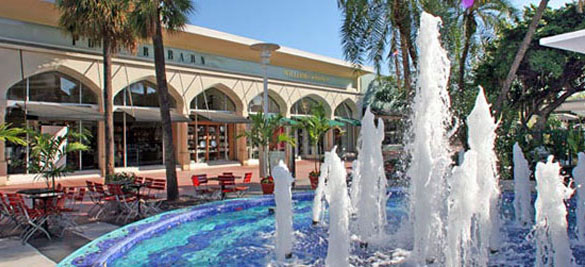
Lincoln Road Mall offers you one of the finest open-air shopping experiences to be found. Breezing from haute boutiques to top fashion stores, while dining at cozy sidewalk cafes, makes Lincoln Road the place in Miami Beach you won’t want to miss.
Allsaints Spitalfields – Fans of the Irish rock band U2 who recently attended their Miami performance were no doubt amazed to see Bono and the Edge sporting rumpled …
Alvin’s Island – Every resort town needs at least one beach shop where you can grab a t-shirt that reminds your friends back home that you’ve been on vacation …
Anthropologie – The blending of bold colors and rough hewn styles labored over by artisans and craftsmen adds to the bohemian vibe of the Lincoln Road flagship …
BASE – If there is a top spot in South Beach to set up a one-of-a-kind shop, it is surely in the prestigious environs of the Sterling Building, a landmark …
BCBG Max Azria – The BCBG Max Azria store on Lincoln Road is the largest in the state and you’ll be amazed at its extensive, trendy medley of women’s styles …
Bebe – Possibly one of the busiest clothing stores on Lincoln Road, Bebe is a familiar name to many and a reliable source to most. No matter what your …
Blue Glue Bikinis – A Paris-based manufacturer who started crafting swimwear for some pretty major brands way back in 1989, Blue Glue launched their original collection …
Cache – Cache’s motto: “confident, sexy, social and stylish.” It’s a sensible shopping haven for trendy older women who aren’t audacious enough to wear …
CB2 – CB2 brings a mix of home goods many compare to the Swedish stylings of IKEA to the shores of South Beach. With the nearest IKEA location nearly …
Fragrance Shop – Walk into your own antique apothecary chock-full of over 800 hundred bottles of scented pure oils. The Fragrance Shop prides itself on carrying …
French Connection – Way back in old-timey times, before there was texting and sexting and all that LOL business, bawdy teens considered it the height of rebelliousness …
Gap – The brand new Lincoln Road Mall Flagship of GAP brands is as cool as it gets with 2 floors of shining, wrap-around windows and over 19,000 square feet of retail space …
H&M – The much-anticipated flagship shop debuted on Lincoln Mall in the space formerly occupied by the New World Symphony at the Lincoln Theater …
J.Crew – Bringing a preppy aesthetic to South Beach, J.Crew sells traditional sportswear for men, women and children in a range of bright, saturated colors …
L’Occitane – The high-end skin care business can be really rewarding, particularly for brands that foster a sense of evangelism in their customers. So, it’s no …
Lucky Brand – The designer jeans trend shows no sign of stopping anytime soon, and Lucky Brand, the popular destination for pricey denim, serves the stylish …
Ricky’s – The best way to describe Ricky’s: “A drug store on ecstasy,” says a store employee. Lively neon wigs cover the right wall; colorful flip flops …
Steve Madden – Steve Madden is one of America’s most popular mid-priced shoe brands with men’s women’s and children’s shoes and accessories sold in store …
Swarovski – Precisely cut lead crystal is the hallmark of Swarovski on Lincoln Road. Whether it’s jewelry in the form of necklace and earring sets, or their …
Victoria’s Secret – Trips to the mailbox can sometimes be soul-crushing ordeals for the modern woman when she discovers the latest edition of the Victoria’s Secret …
ZARA – The fashion press is abuzz this week with news that Spanish retailer ZARA plans to build a 2-story 26,000 square foot flagship shop inside one …